
When to Do Less
- Barbara Thoma
- 5. Jan.
- 2 Min. Lesezeit
Aktualisiert: 11. Jan.
Breaking the High-Energy Spiral
Dogs are not engines. We often mistake energy for a need to burn, but overstimulation can create anxious, demanding, and frustrated dogs and leave owners completely exhausted. Sometimes the smartest move is to slow down.
The behavioural trap
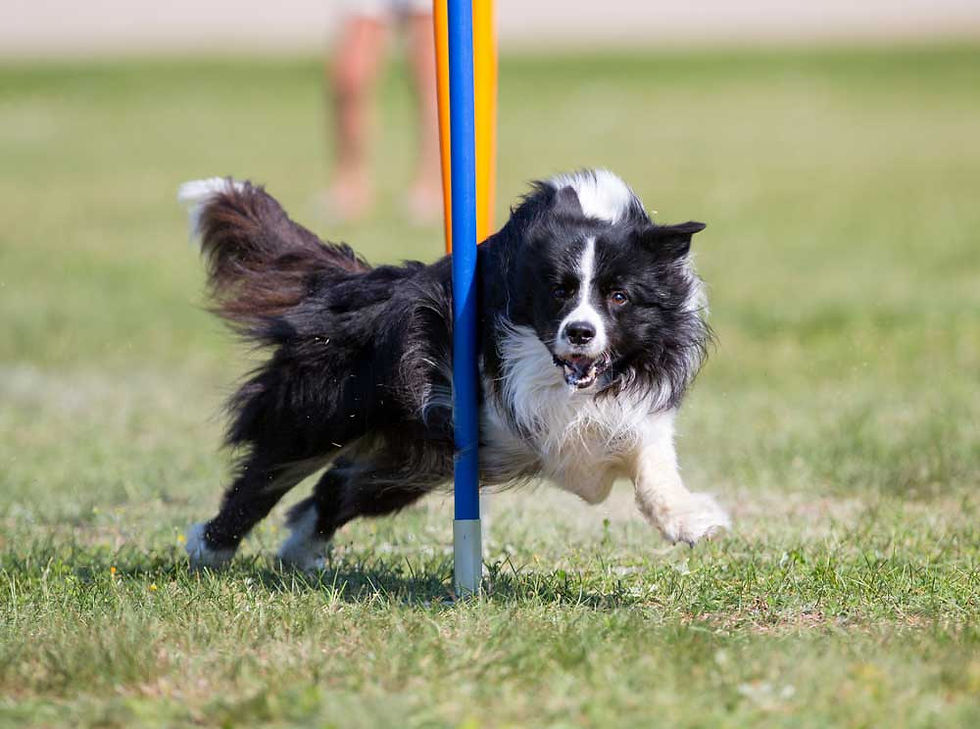
Many owners of working breeds believe the only way to satisfy their dog is to keep them constantly busy. Imagine a Border Collie ready to go at 6:30 a.m.: Fetch, chase, tug-of-war, training, zoomies, all in a cycle that repeats. Every attempt at calm is met with nudges, barking, or insistent eyes. You try to keep up, but by evening you are drained and your dog is still full of energy.
This is a behavioural trap. Constant high-arousal activity locks the nervous system into one mode: alert, reactive, driven. The brain treats adrenaline as the default, and calm isn’t an option. Owners often think “more activity = less energy,” but overdoing it only escalates reactivity, demands, and frustration, creating a self-reinforcing loop.
The irony is that sometimes the most important thing you can do for a high-energy dog is less.
Dogs need behavioural diversity
Dogs, like people, benefit from moving between different states. They need:
High-arousal activity such as play, training, fetch, or agility
Low-arousal activity such as sniffing, chewing, observing, or resting
Opportunities to practise self-regulation
Without these low-arousal moments, dogs cannot practise impulse control or emotional regulation. Their behaviour becomes rigid, repetitive, and demanding. Frustration mounts and can show as barking, lunging, destructive chewing, or constant attention-seeking. Research on canine stress and arousal demonstrates that chronically high stimulation reduces cognitive flexibility and impairs learning.
Practical ways to achieve balance
Balance comes from teaching dogs to move confidently between excitement and calm. A varied routine gives the nervous system a chance to reset.
Encourage independent activity so your dog learns to self-soothe and explore without constant human input.
Predictable routines signal when it’s time to play, explore, or rest.
Watch arousal signals such as pacing, nudging, vocalising, and slow down before escalation.
Reward calm behaviours: lying quietly, settling on cue, independent exploration.
Stimulate the brain with problem-solving games, scent work, or choice-based tasks while avoiding nervous system overload.
What’s in it for you
Dogs that can self-regulate are just easier to live with! You will be less exhausted, less frustrated, and can enjoy being with your dog instead of constantly managing a high-speed whirlwind.
If your dog seems permanently “on,” demanding, or reactive, I can help you create calm, confident routines that work for both of you.